Aug 5, 2026
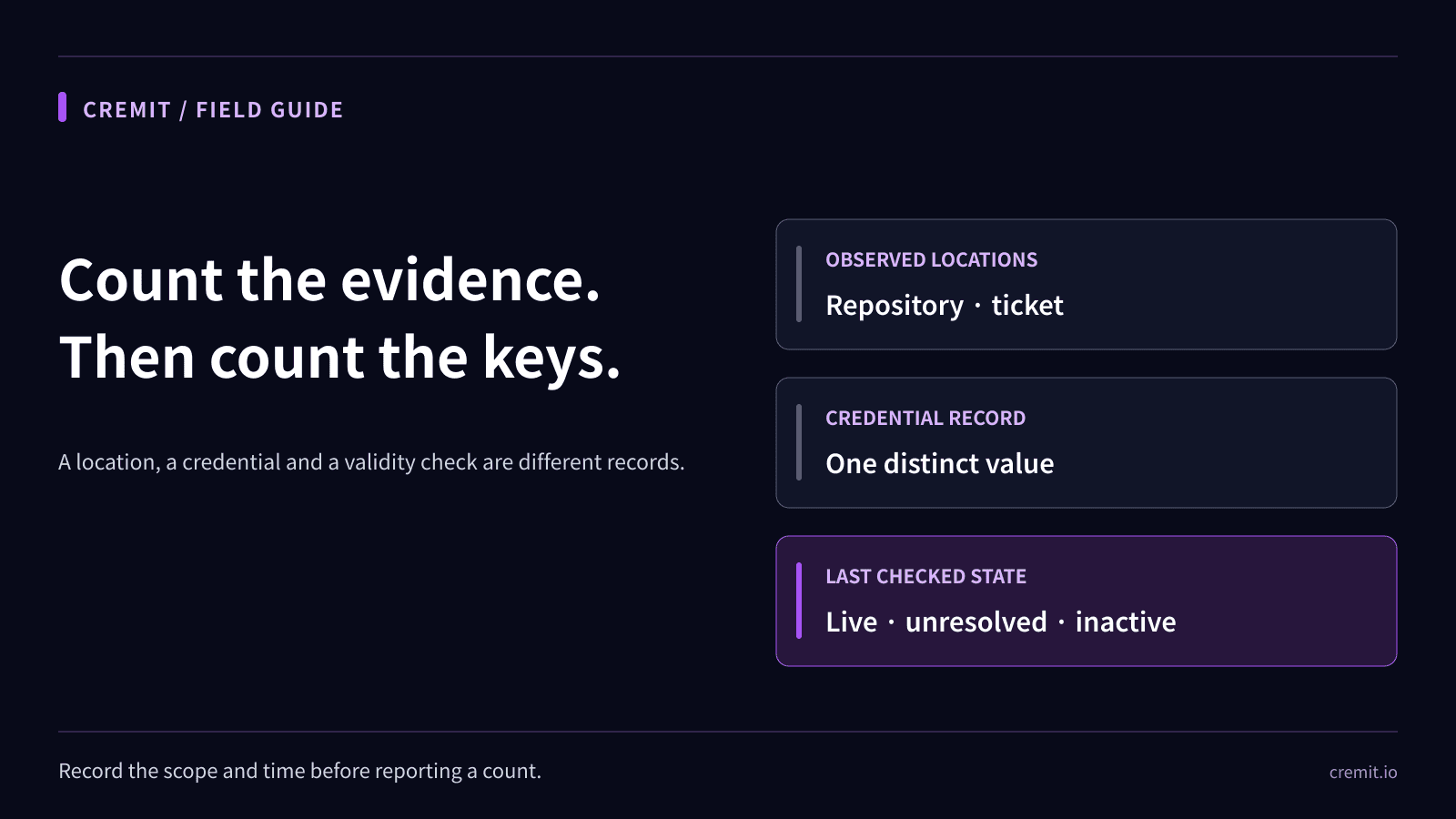
How to count live credentials without confusing matches and keys
Count observed locations, distinct credential records and verification states separately. Define scope and check time before reporting exposure.

Ben Kim
Optional cookies count visits, identify visiting companies, and measure ads. You can decline. Cookie policy
Field studies, incident analyses and response guides from the Cremit research team, written from what we measured.
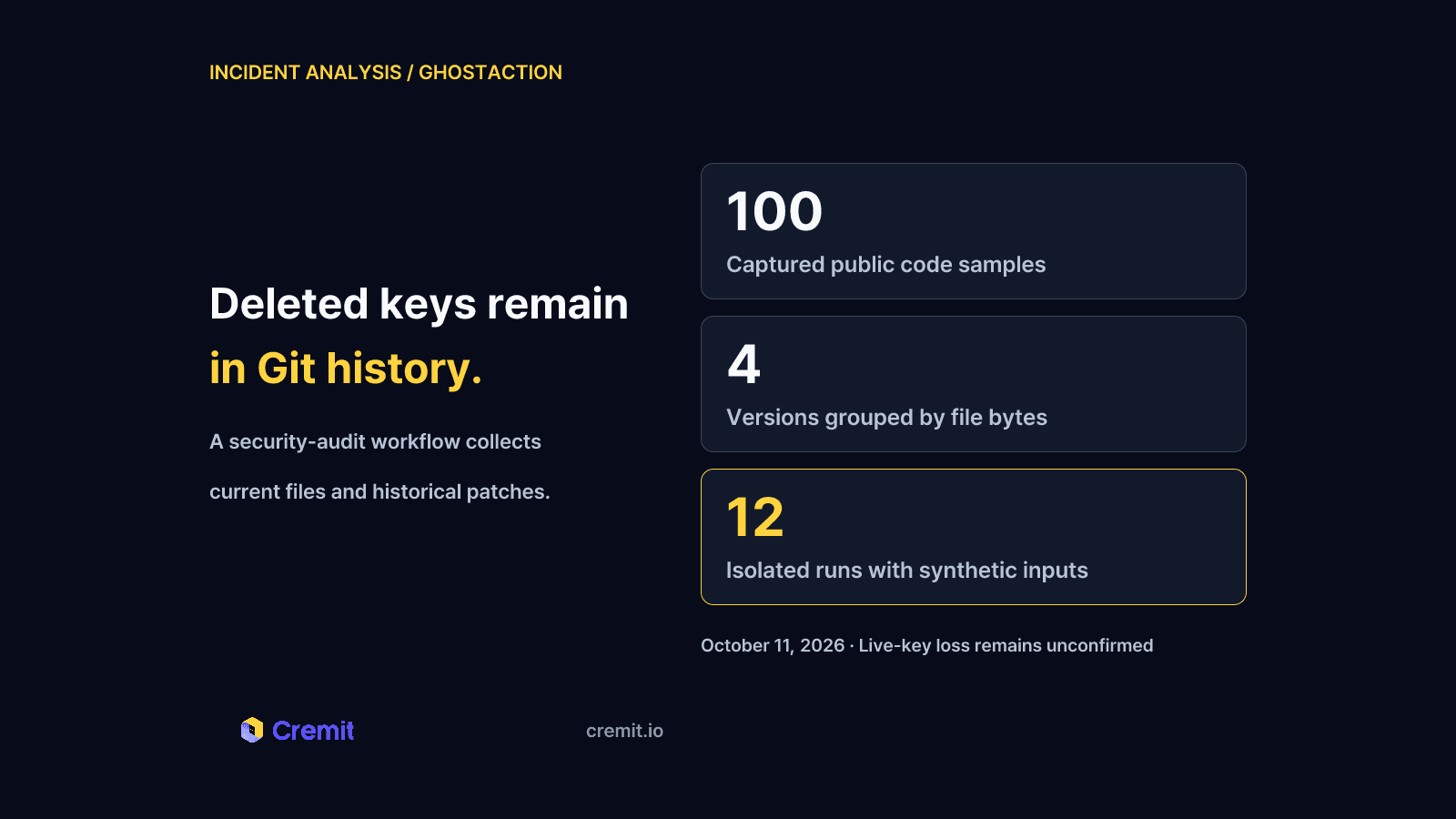
A review of 100 public workflow samples and Uber repository events shows four collector versions. We examine deleted-key collection through Git patches, successful exits after transfer failure, and credential-based response priorities.
Count observed locations, distinct credential records and verification states separately. Define scope and check time before reporting exposure.
How Cremit Platform finds exposed credentials, verifies supported types, and routes findings to an owner, with clear limits.
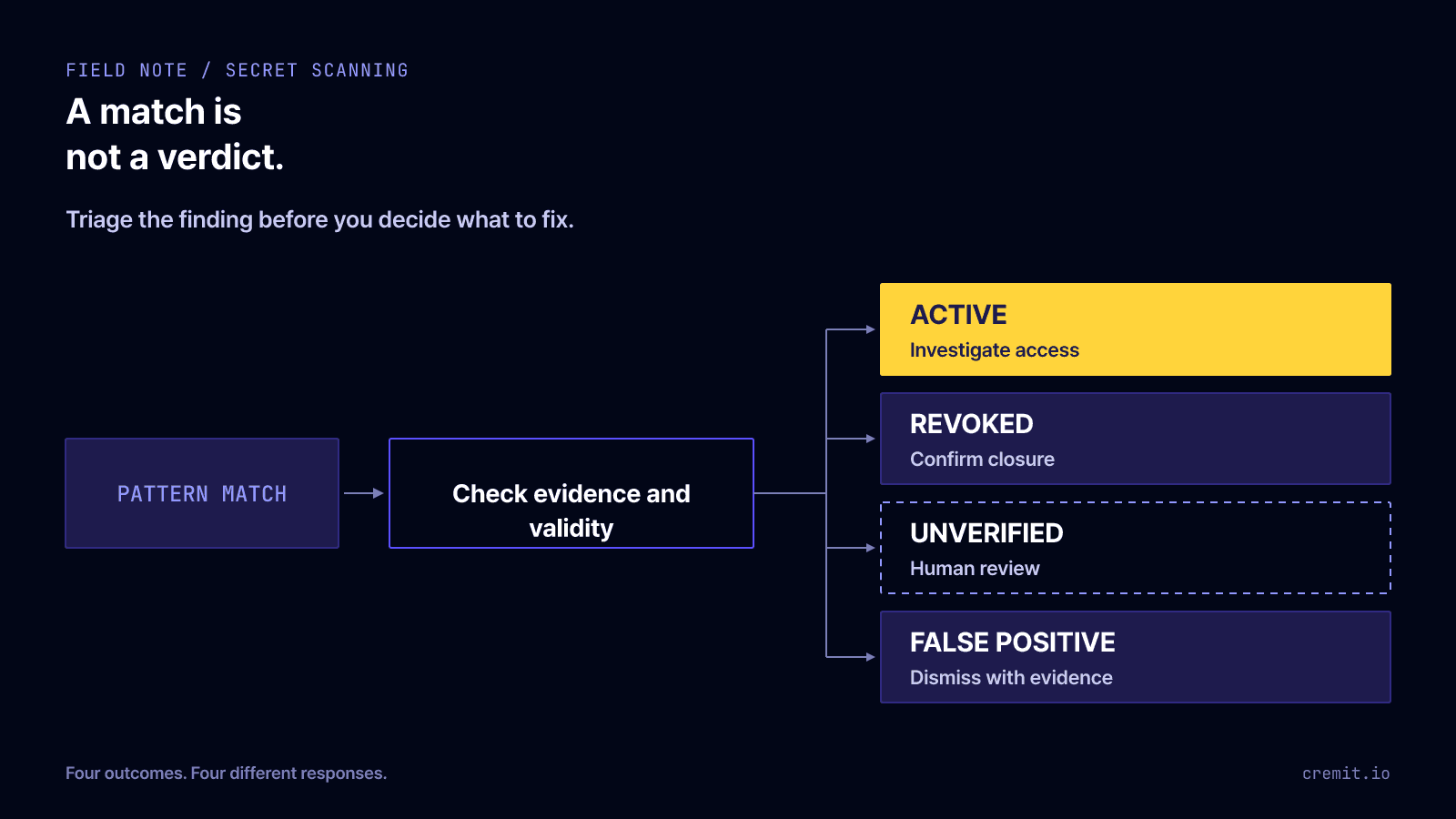
A pattern match, a revoked key, and an unverified key need different responses. Learn how to separate them and prioritize exposed credentials.
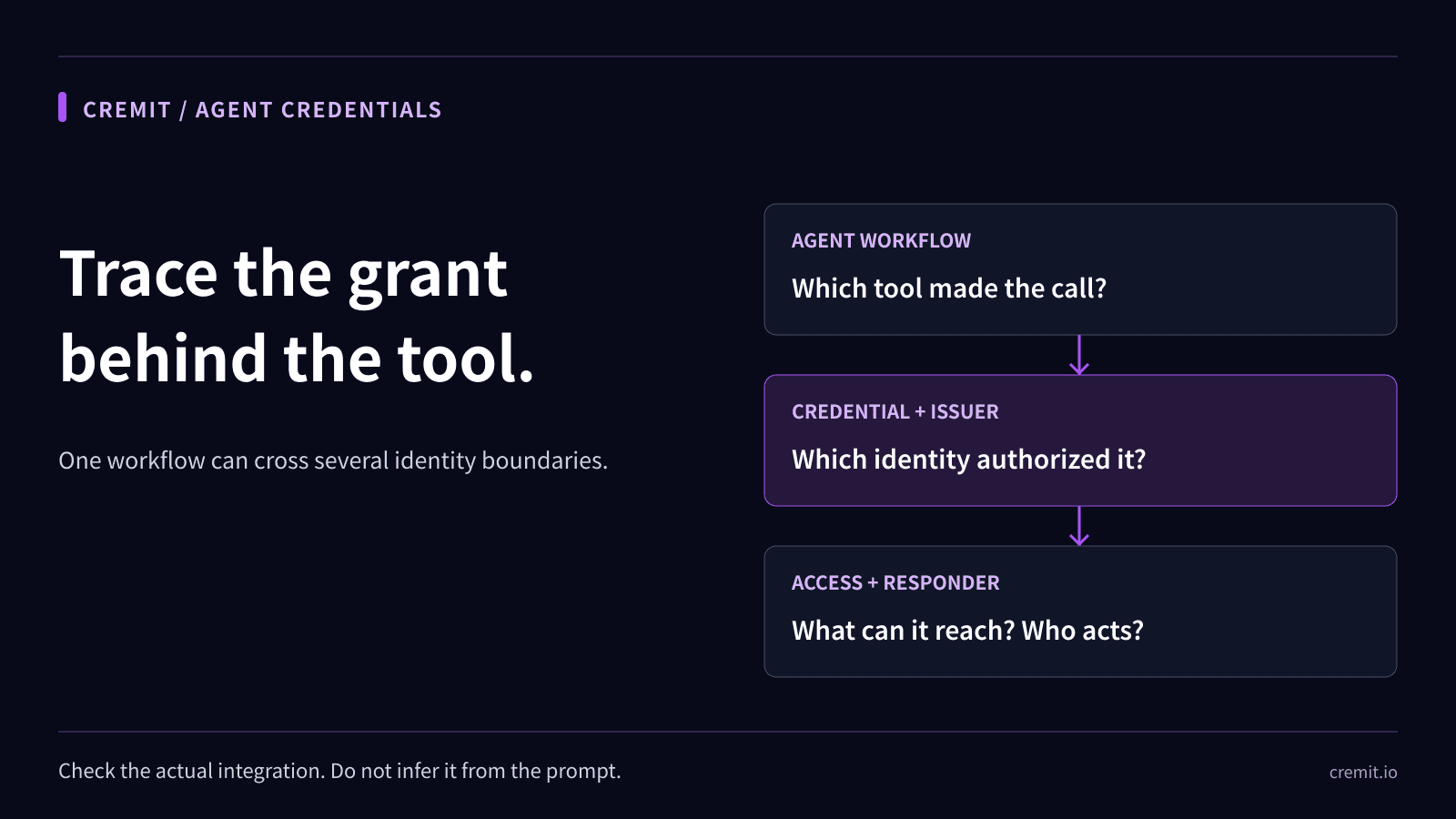
An agent workflow may cross several identity boundaries. Trace the actual grant, source location, permissions and owner before judging a leaked key.
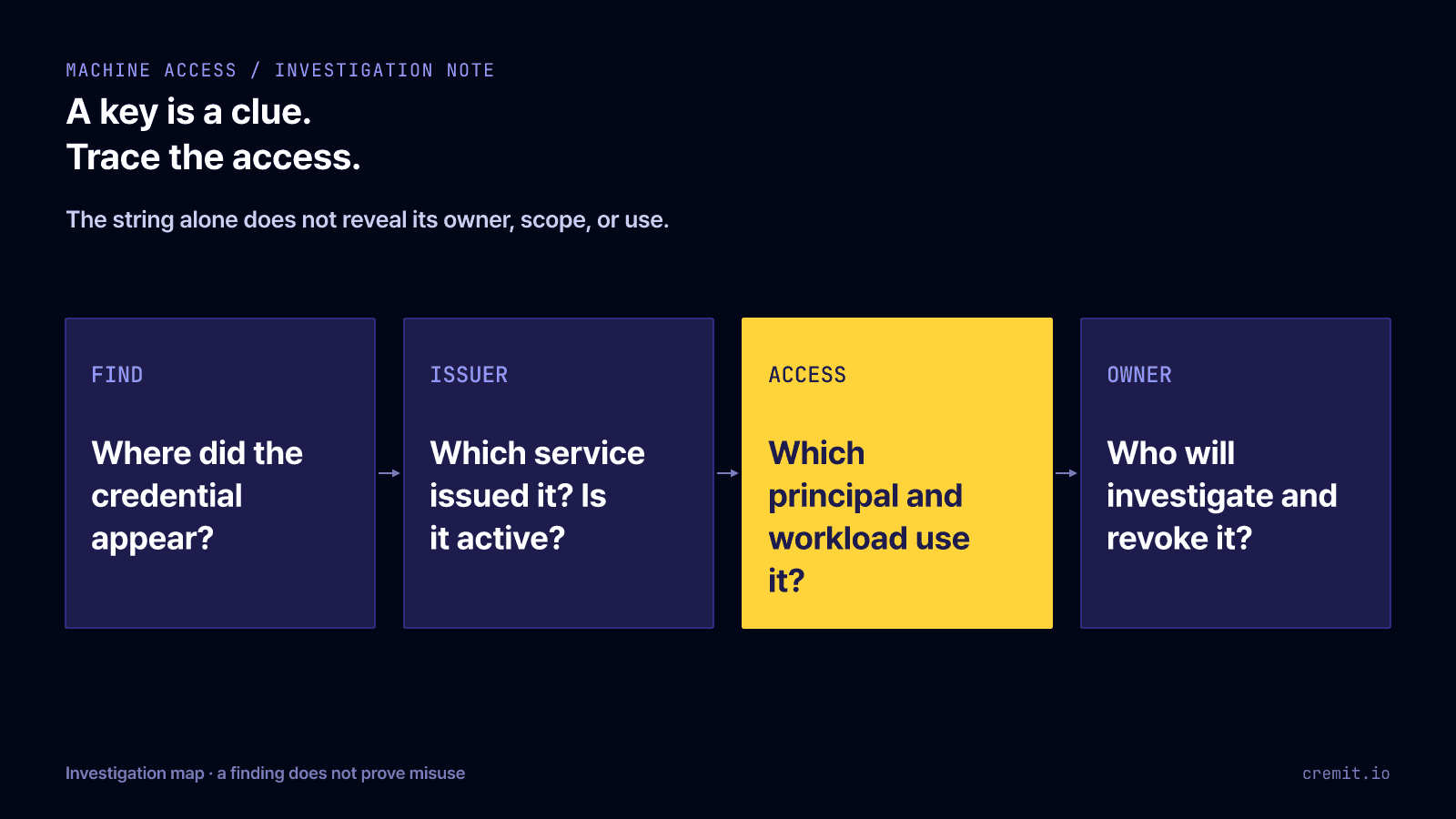
An exposed key is a lead. Connect it to its issuer, principal, permissions, workload, and owner before closing the access path.
A leaked Slack incoming webhook is usually triaged as low severity: write-only, one channel, no data access. The moment an AI agent reads that channel and can act with tools, that write-only primitive becomes an indirect prompt injection path into the agent's privileges. Here is the full kill chain, the exact preconditions, and how to defend it.
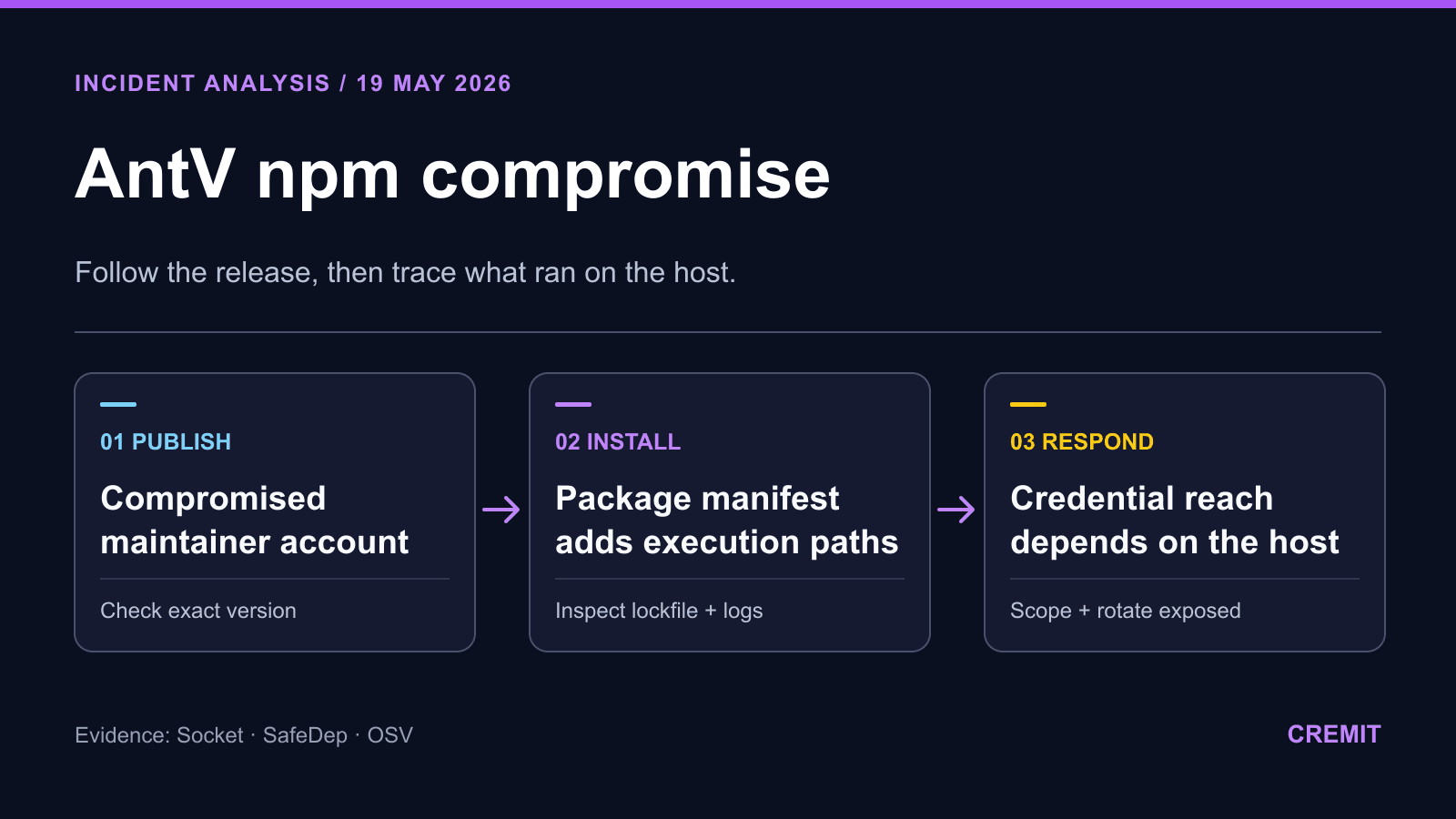
Socket and SafeDep documented hundreds of malicious AntV-related npm releases. Compare exact versions, understand the two execution paths, and scope credentials exposed on affected hosts.
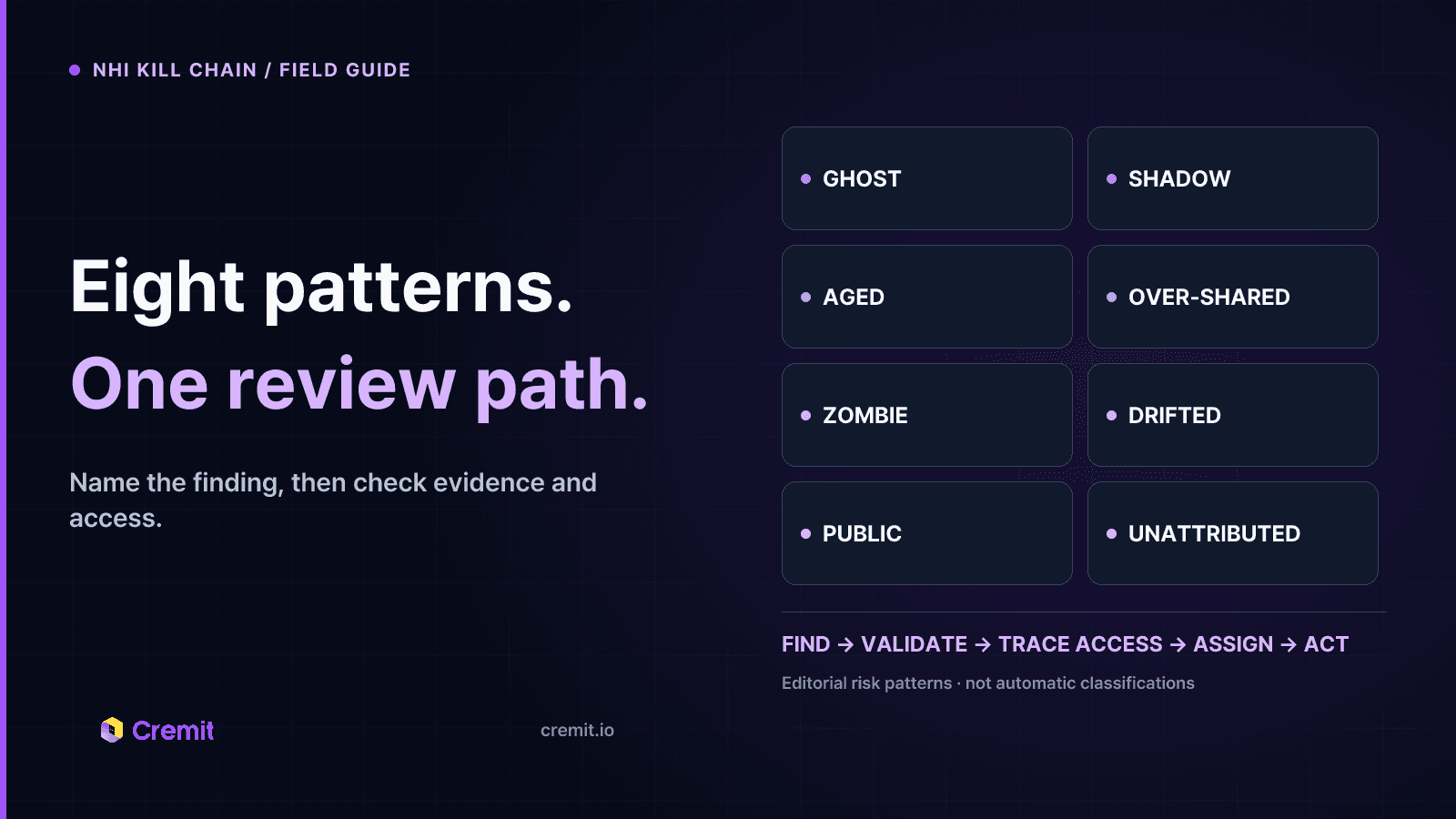
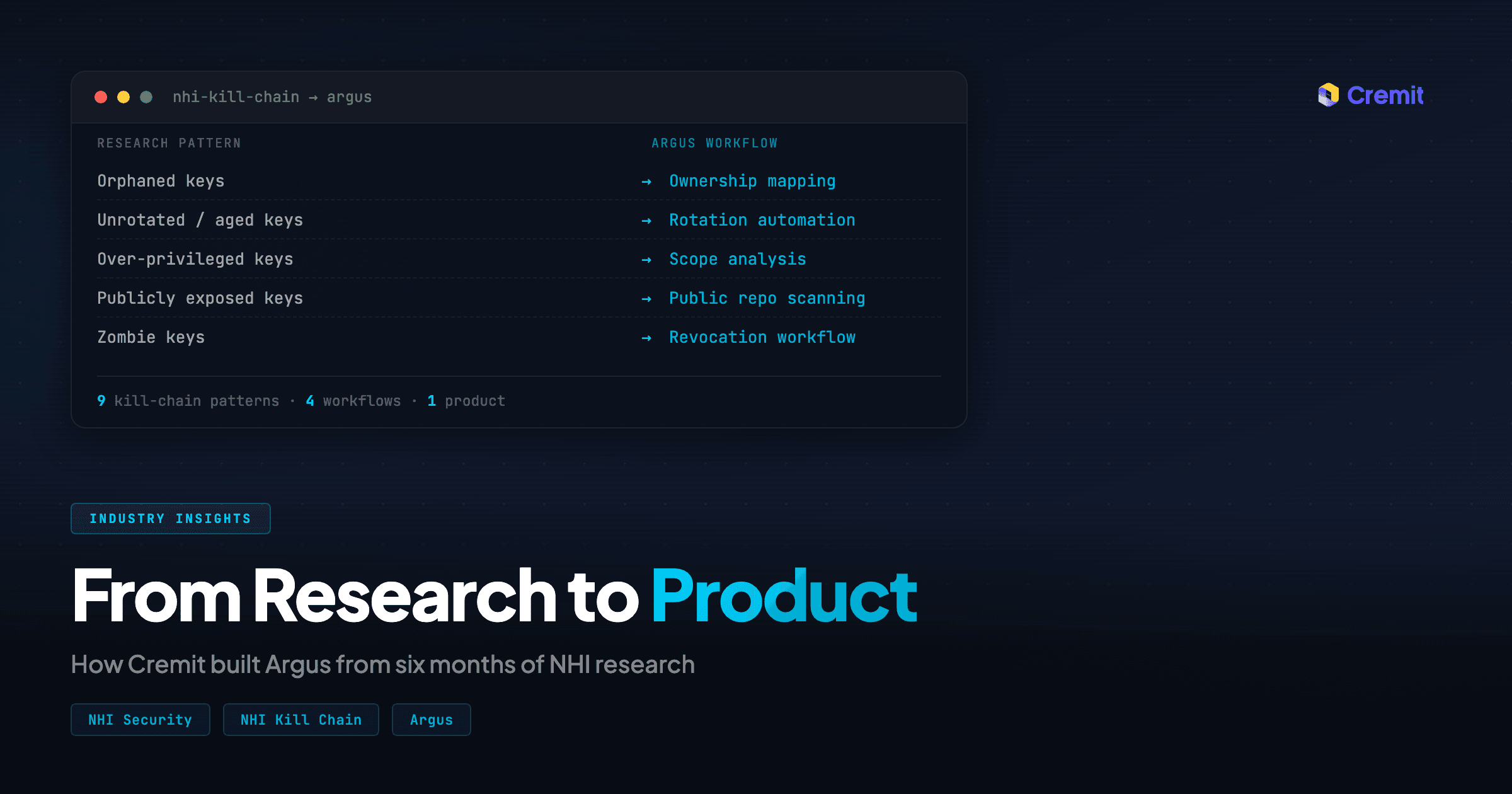
A practical summary of eight NHI credential exposure patterns, the evidence to check, and what Cremit Platform can help investigate.
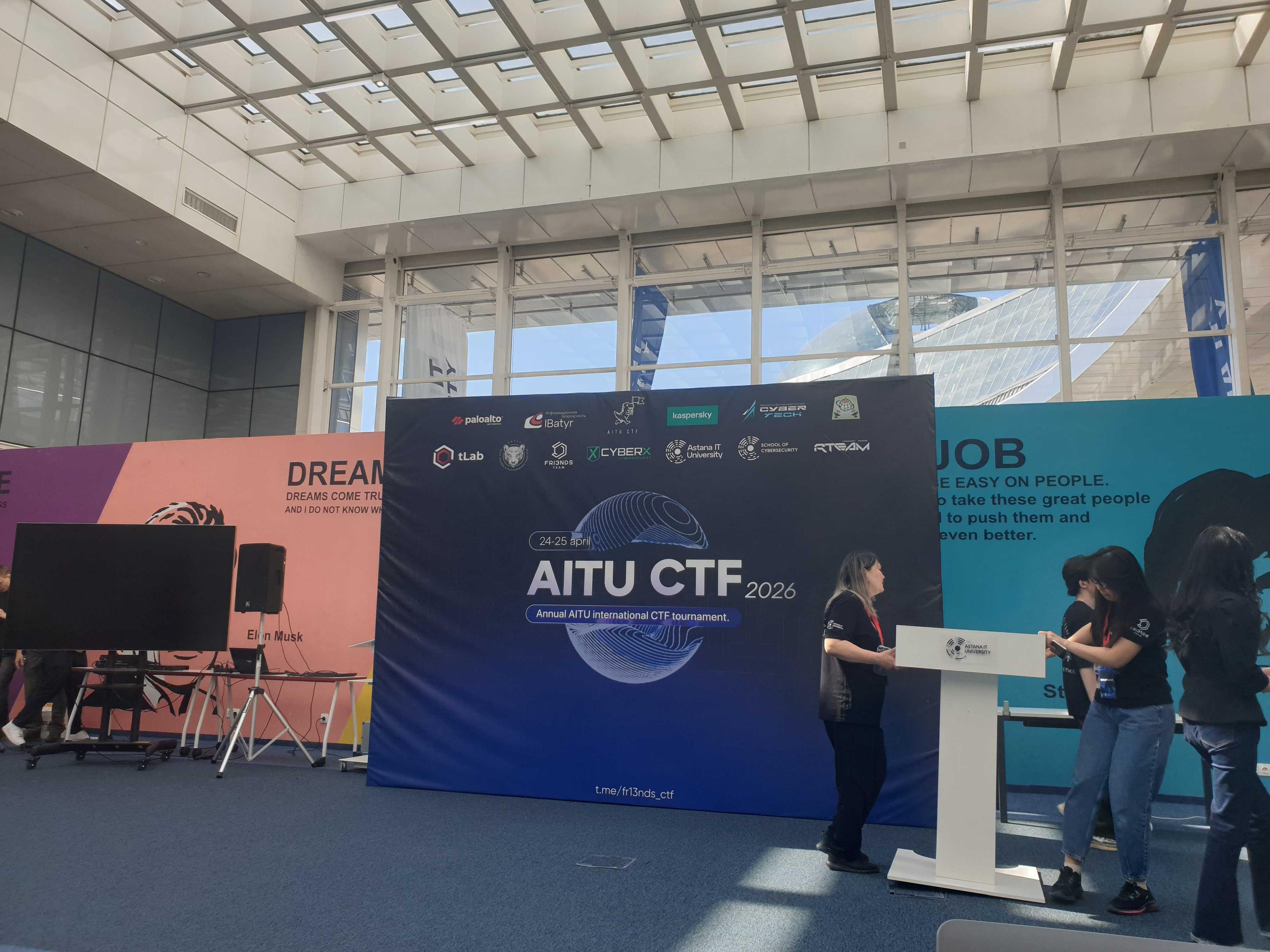
Full writeup of the AITU CTF Final (April 25-26, 2026), a HackCity-format competition. We walk through exploiting DMZ hosts via XXE, SSTI, and SQLi, pivoting into the DEV segment through AD lateral movement, escaping a privileged Docker container via cgroup abuse, and breaching a healthcare system through JWT JKU header injection.

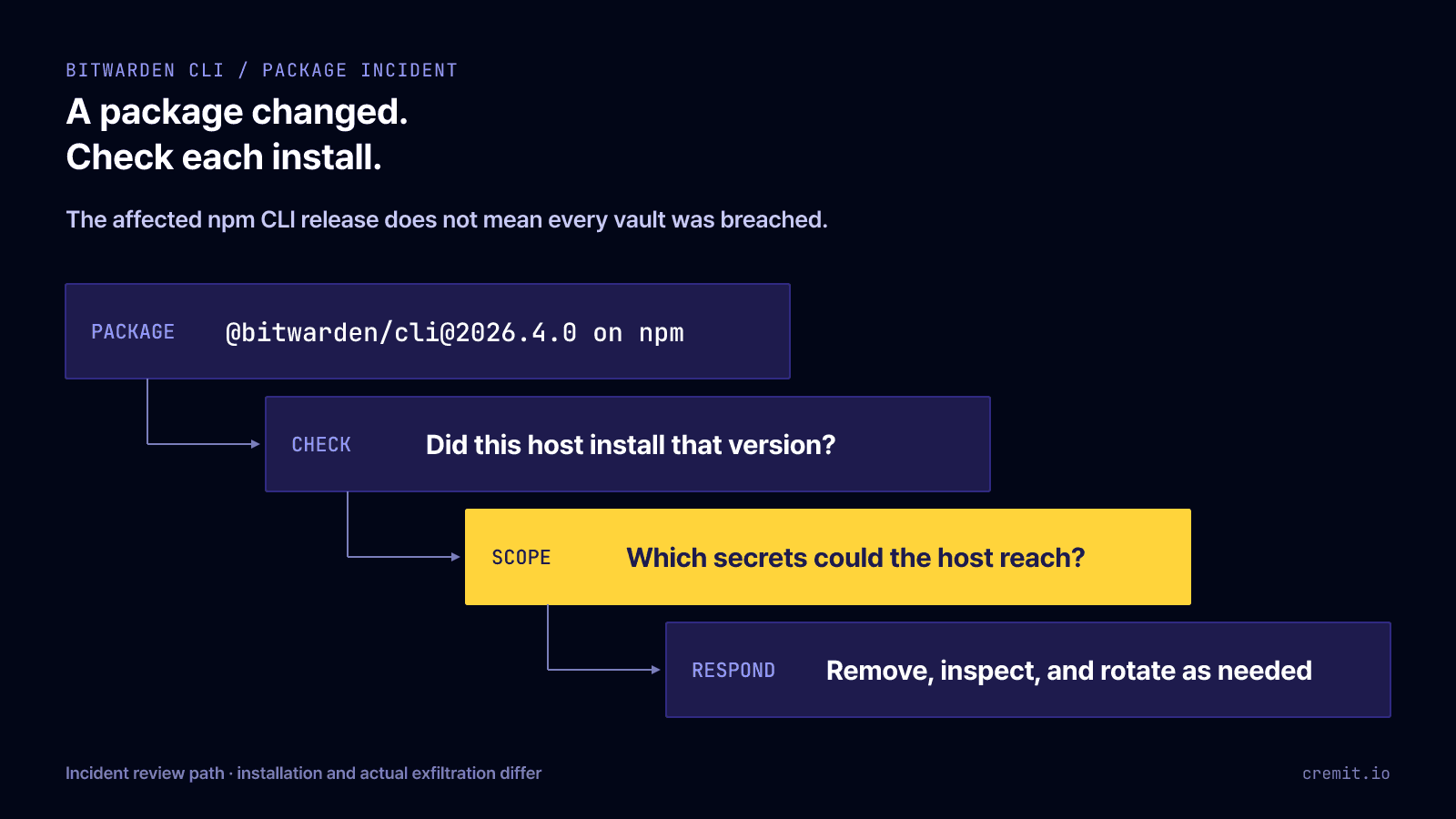
A malicious CLI package was available on npm for 93 minutes on April 22, 2026. Check who installed it, what researchers found, and Bitwarden’s response steps.
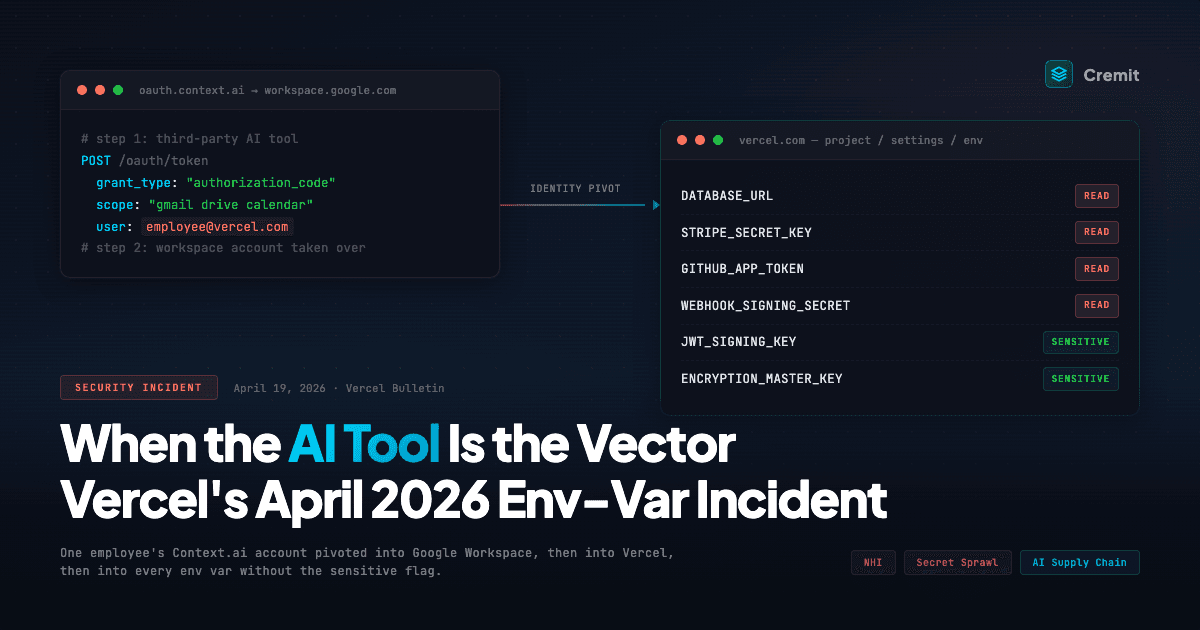
Vercel confirmed an unauthorized-access incident on April 19, 2026 that started in a third-party AI tool, pivoted through Google Workspace, and reached environment variables in a subset of customer projects. The exposure surface is every env var that was not marked sensitive. Here is what is confirmed, what is noise, and what to rotate first.
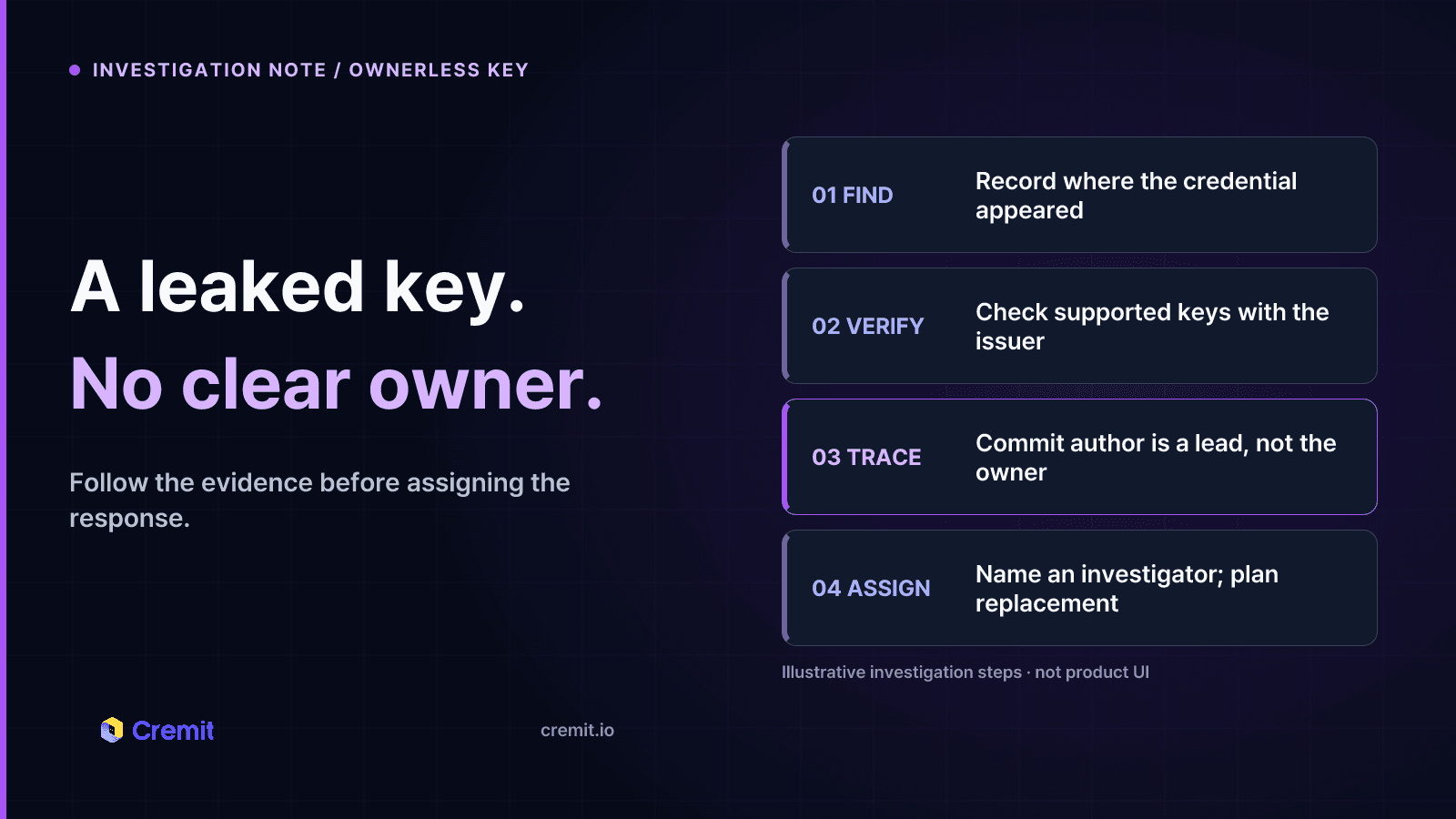
How to verify, investigate, assign, and replace an exposed credential when the service owner is unclear.
A short monthly brief on credential security from Cremit.